Japan's car auction system is not a single market. It is a layered network of lanes, access levels, and buyer types — each with different pricing, vehicle quality expectations, and buying conditions. Understanding where you sit in that system, and which lane is right for your needs, directly affects the vehicles you access and the prices you pay.
This guide explains the difference between dealer and private buyer lanes, what each offers, and how to choose the right approach for your import goals.
How Japanese Auction Lanes Are Structured
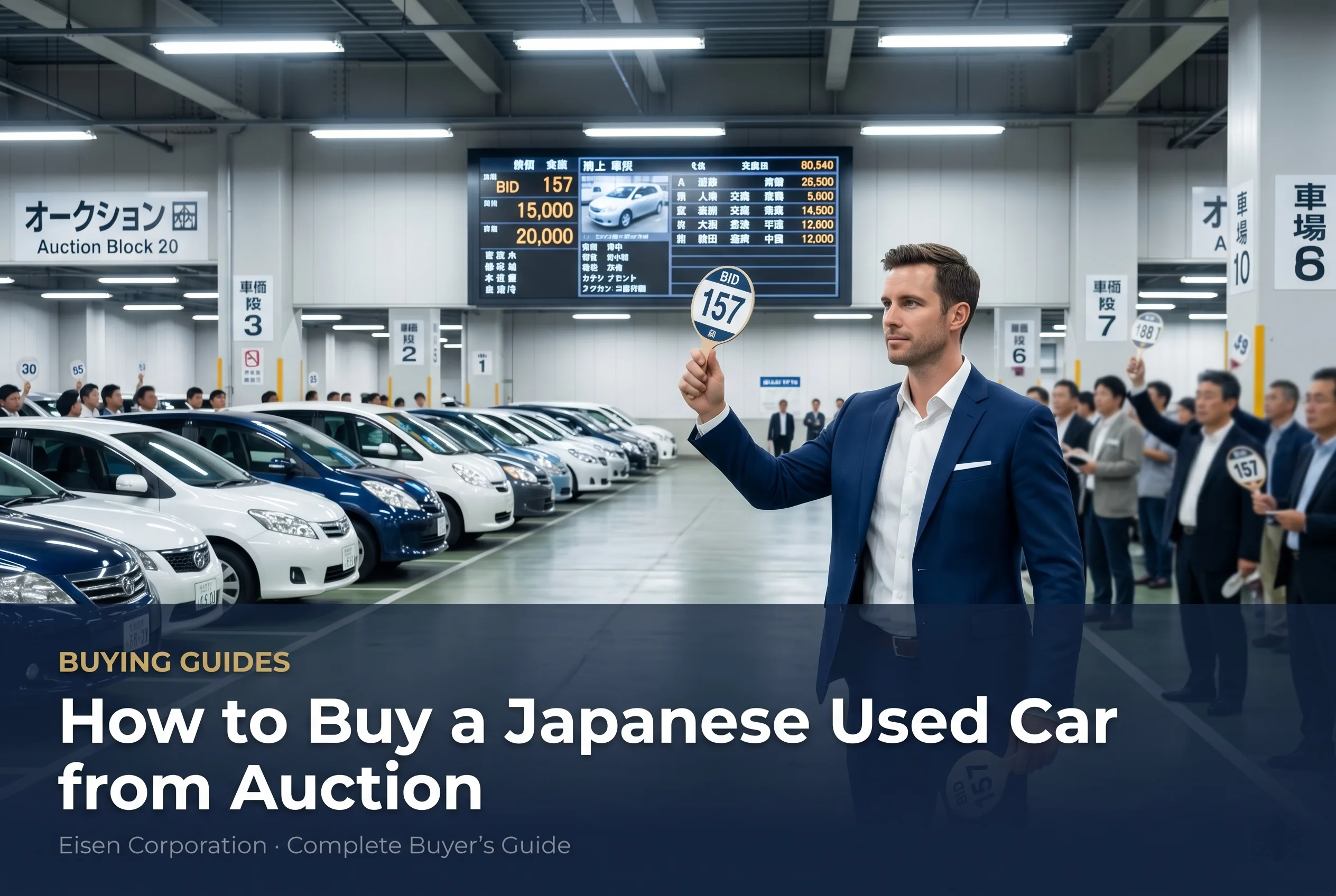
Japan's major auction houses — USS, TAA, JU, and HAA Kobe — organise their vehicle inventory across multiple lanes running simultaneously on auction day. Each lane typically handles a specific category of vehicles — compact cars, SUVs, commercial vehicles, luxury, damaged stock, and so on.
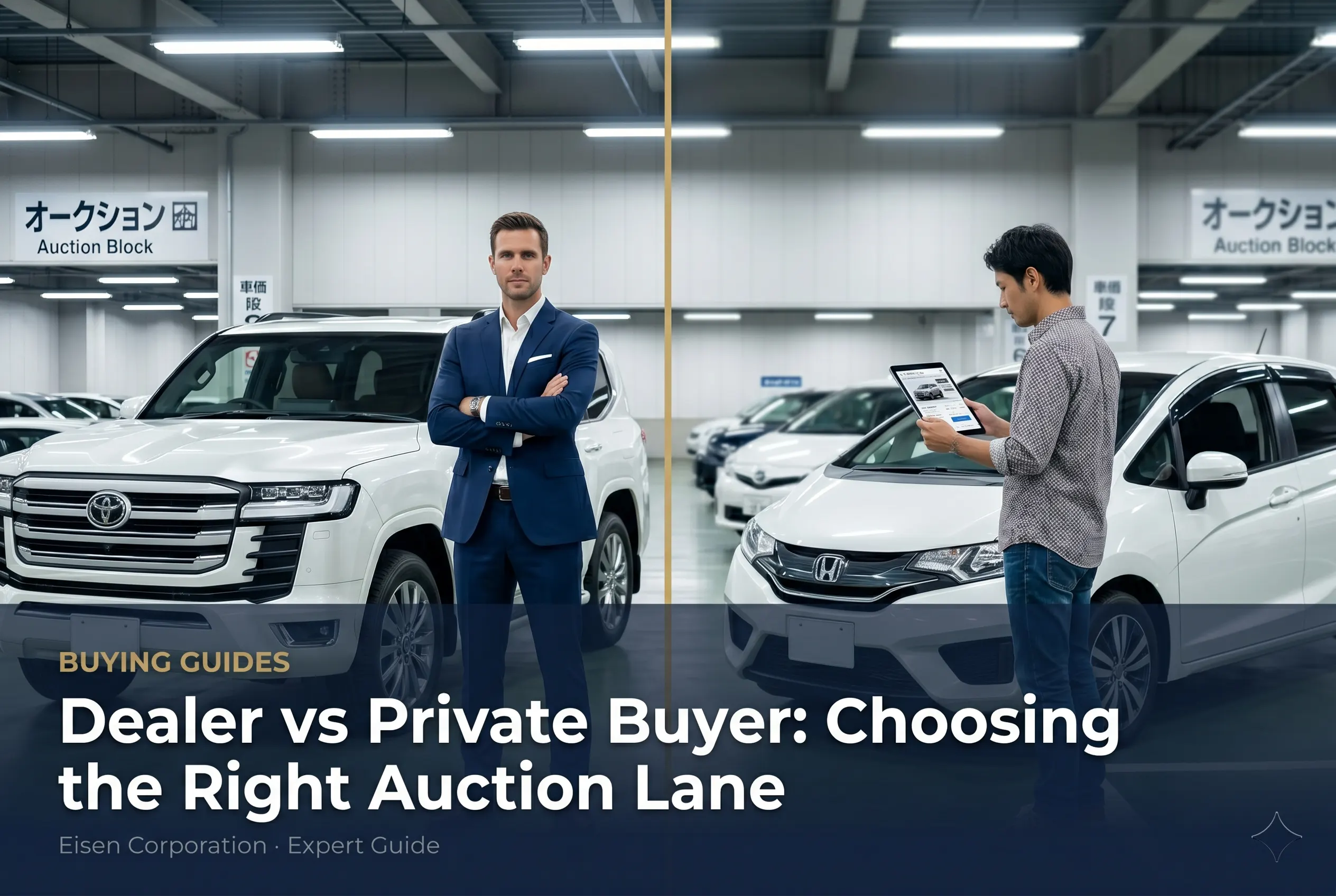
Within this structure, two broad buyer categories exist: registered dealers with direct auction memberships, and private or overseas buyers who access the auction through an intermediary export agent.
The lane itself does not change based on who is buying. What changes is how you access it, what information you receive, and what protections apply to your purchase.
Dealer Access — Direct Membership
Registered Japanese dealers hold direct membership with auction houses. This gives them:
Real-time bidding access — dealers bid live in the auction hall or through the auction's own online portal, seeing the same information at the same time as every other direct member.
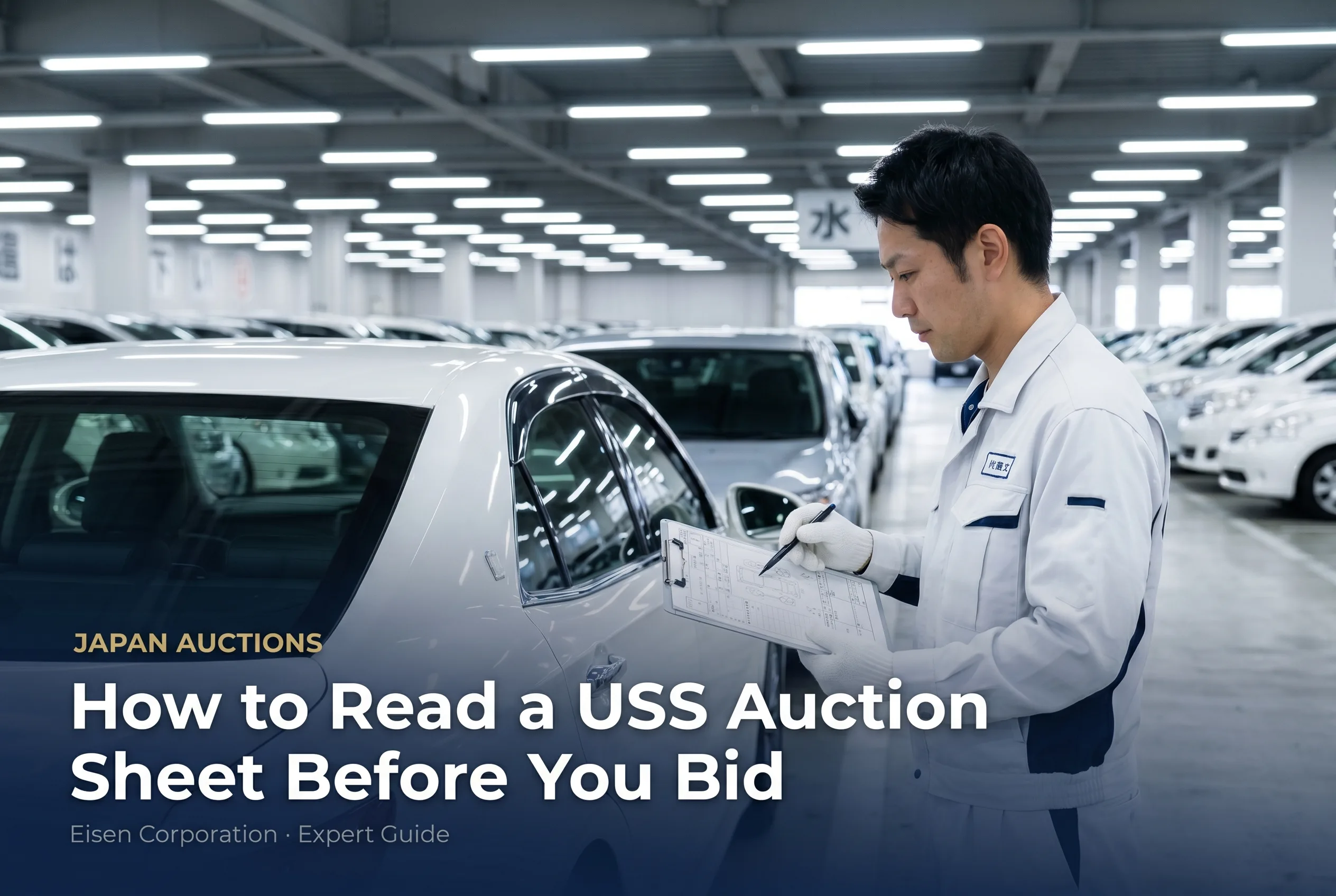
Full auction sheet access — members can view complete inspection sheets, all available photos, and any additional notes added by the auction house before bidding opens.
Dispute resolution rights — direct members can raise formal complaints with the auction house if a vehicle's condition does not match its description. Successful claims result in compensation or cancellation of the sale.
Historical price data — dealer members can access past sale prices for specific models, grades, and mileage ranges — giving them a data-driven view of fair market value before they bid.
Direct membership requires a Japanese business registration, significant financial deposits with the auction house, and physical or established digital presence in Japan. For overseas buyers, obtaining direct membership is not practical — which is where export agents come in.
Private and Overseas Buyer Access — Through an Export Agent
Overseas importers — whether dealers in their home market or private individuals — access Japan's auctions through licensed export agents. The agent holds the auction memberships and bids on the buyer's behalf.
This model offers several genuine advantages for overseas buyers:
No Japanese business registration required — the agent's membership covers the transaction entirely.
Language barrier eliminated — auction sheets, inspector notes, and all communications are handled by the agent's bilingual team.
Market expertise — a good export agent advises on pricing trends, model availability, and which auction houses are currently producing the best stock for specific vehicle types.
Consolidated logistics — the agent handles everything from bid to shipment, meaning the buyer deals with one point of contact rather than coordinating between auction houses, transport companies, and shipping lines independently.
The trade-off is that the buyer is one step removed from the live auction. You are trusting your agent's judgement, speed, and honesty — which is why choosing the right export partner matters as much as choosing the right vehicle.
Which Lane Is Right for You?
The answer depends on your volume, frequency, and long-term importing goals.
You are a high-volume dealer importing regularly: If you are buying 20 or more vehicles per month consistently, exploring a formal relationship with a Japanese export agent who offers dedicated sourcing and priority access to specific auction lanes makes sense. Volume buyers can negotiate service terms and get faster turnaround on specific model requests.
You are a mid-volume dealer importing 5 to 20 vehicles per month: Working with an established export agent like Eisen is the most efficient and cost-effective approach. You get full auction access, professional sourcing, and reliable logistics without the overhead of managing Japan-side operations yourself.
You are a private buyer importing one or two vehicles: An export agent is your only practical route. Direct auction membership is not viable for single purchases. A reputable agent gives you access to the full auction network, professional document handling, and the dispute protections that come with working through an established company.
Understanding Auction Lane Categories
Beyond buyer type, knowing which auction lane holds the vehicles you want helps your agent target the right stock efficiently.
Regular lanes — standard used vehicles across all grades. The majority of export-suitable stock is sourced here. Grades 3 to 5, wide model variety, consistent weekly supply.
Premium lanes — higher-grade vehicles, typically Grade 4.5 and above. Lower volume but better condition stock. Prices are higher but competition from domestic buyers is also stronger.
Damaged / repair lanes — Grade R, Grade 2, and below. Vehicles with accident history or significant damage. Only suitable for buyers who understand repair costs and have reliable repair facilities at destination.
Specialty lanes — kei cars, commercial vehicles, trucks, buses, and motorcycles. Separate from passenger car lanes and often run on different auction days.
Direct sale / negotiation lanes — some auction houses offer a fixed-price or negotiated-price section alongside the live auction. Useful for buyers who want to avoid competitive bidding on specific models.
What Your Export Agent Should Be Doing for You
Whether you are a dealer or a private buyer, your export agent's job goes beyond simply placing a bid. A quality agent should:
- Review the full auction sheet and translate inspector notes before presenting a vehicle to you
- Flag any damage patterns inconsistent with the stated grade
- Advise on current pricing trends for your target model
- Submit disputes on your behalf where a vehicle's condition does not match its description
- Provide a complete document pack before the vessel departs Japan
- Keep you updated at every stage from auction win to port arrival
If your current agent is not doing all of these things, you are not getting full value from your Japan import relationship.
Working With Eisen
Eisen provides full auction access across USS, TAA, JU, and HAA Kobe — covering all major lane categories. Whether you are sourcing a single vehicle or building a regular import programme, our team handles sourcing, bidding, inspection, documentation, and shipping as a complete service.
Contact our team to discuss your requirements and we will tell you exactly which lanes and auction houses are currently producing the best stock for your market.