
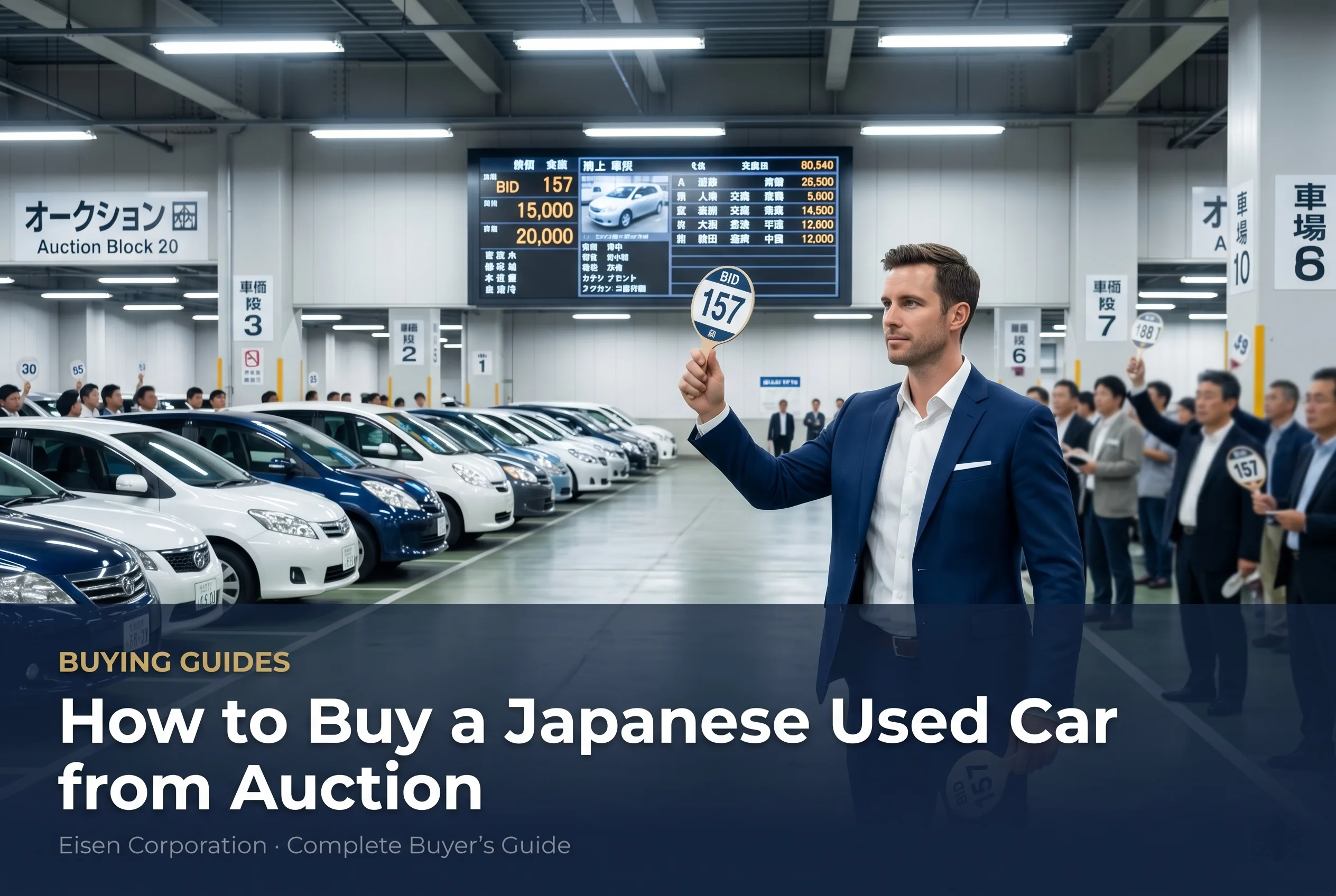
Japan runs the largest and most structured used car auction system in the world. Every week, hundreds of thousands of vehicles pass through auction houses like USS Tokyo, TAA, JU, and HAA Kobe - inspected, graded, and offered to buyers globally.
For importers, this system offers unbeatable access to high-quality, well-maintained vehicles at competitive prices. But if you have never bought through a Japanese auction before, the process can seem complex. This guide walks you through every step.
Step 1: Understand How Japanese Car Auctions Work
Japanese car auctions are not open to the public. Only licensed dealers and registered export agents can bid directly. As an overseas importer, you access the auction system through an export company like Eisen - which holds auction memberships, employs bilingual staff, and manages the entire buying process on your behalf.
Auctions run multiple times per week across Japan. Each vehicle is physically inspected before auction day and assigned a condition grade. Listings go live online before the auction, giving buyers time to review auction sheets, photos, and pricing history before committing to a bid.
Step 2: Define What You Are Looking For
Before you start browsing, be specific about what you need. Vague searches produce overwhelming results. Consider:
Make and Model - Toyota, Honda, Nissan, Subaru, Daihatsu, and Mazda dominate Japan's auction supply. Popular export models include the Toyota Corolla, Toyota Prado, Honda Fit, Nissan X-Trail, and Daihatsu Mira.
Year Range - Newer models command higher prices. For budget-conscious markets, 2010 to 2018 models often offer the best balance of condition, features, and price.
Mileage - Japanese vehicles are known for low mileage relative to their age. Anything under 80,000 km is considered reasonable. Under 50,000 km is excellent.
Grade - Grade 4 and above is the standard for clean, importable vehicles. Grade 4.5 and 5 represent very good to excellent condition.
Drive Type - Confirm whether your market accepts Right Hand Drive (RHD) or requires Left Hand Drive (LHD). Most Japanese domestic vehicles are RHD.
Step 3: Review the Auction Sheet Carefully
Every vehicle at auction comes with a standardized inspection sheet. This sheet documents the condition grade, interior rating, mileage, chassis code, and a diagram of all body damage with location-specific codes.
Reading the auction sheet properly is the most important skill in Japanese used car buying. Key things to look for:
- Overall grade (4 and above is recommended)
- Interior grade (A or B is ideal)
- Damage codes - A (scratch), U (dent), X (panel replacement needed), XX (panel already replaced)
- Accident markers - Grade R or *** flags indicate accident history
- Inspector notes at the bottom - always have these translated
At Eisen, our team reviews and translates the full auction sheet for every vehicle we source, flagging anything that needs attention before you commit.
Step 4: Set a Realistic Budget
The auction bid price is just one part of your total cost. When budgeting for a Japanese import, factor in:
- Auction bid price - the vehicle purchase price in JPY
- Auction fees - charged by the auction house per transaction
- Export agent fees - Eisen's service fee for sourcing, bidding, and handling
- Inland transport in Japan - moving the vehicle from auction yard to export port
- Ocean freight - shipping cost from Japan to your destination port
- Marine insurance - covers the vehicle during transit
- Import duties and taxes - varies by destination country
- Customs clearance fees - local agent fee at destination port
Understanding the full landed cost before you bid prevents surprises on arrival.
Step 5: Place Your Bid
Once you have identified a vehicle and reviewed its auction sheet, you instruct your export agent on the maximum bid you are willing to pay. Your agent bids on your behalf on auction day.
If your bid wins, the vehicle is yours. If outbid, your agent will typically have alternative options ready from the same auction week.
Auction prices fluctuate based on demand, season, and JPY exchange rates. Spring (March to May) tends to see higher supply as Japanese owners trade in vehicles before the new fiscal year. January and February often offer better pricing due to lower domestic demand.
Step 6: Post-Auction Processing and Shipping
After a successful bid, your export agent handles:
- Full payment to the auction house
- Vehicle collection from the auction yard
- Pre-export inspection
- Deregistration and export certificate application
- Booking with a shipping line
- Document preparation (Bill of Lading, commercial invoice, insurance certificate)
From auction win to vessel departure typically takes 2 to 4 weeks. Ocean transit then takes 2 to 6 weeks depending on your destination.
Step 7: Receive and Clear Your Vehicle
When the vessel arrives at your destination port, you or your local clearing agent submits the import declaration along with all shipping documents. Once customs duty is paid and the vehicle is cleared, it is released to you.
The entire process from auction win to vehicle in your hands typically takes 6 to 12 weeks depending on destination.
Why Buy Through Eisen
Eisen handles every step of this process - auction sourcing, bidding, inspection, shipping, and documentation. You tell us what you need, and we find it, buy it, and ship it. No auction membership required, no language barrier, no guesswork.
Browse our current auction listings and in-stock inventory, or contact our team to discuss exactly what you are looking for.