
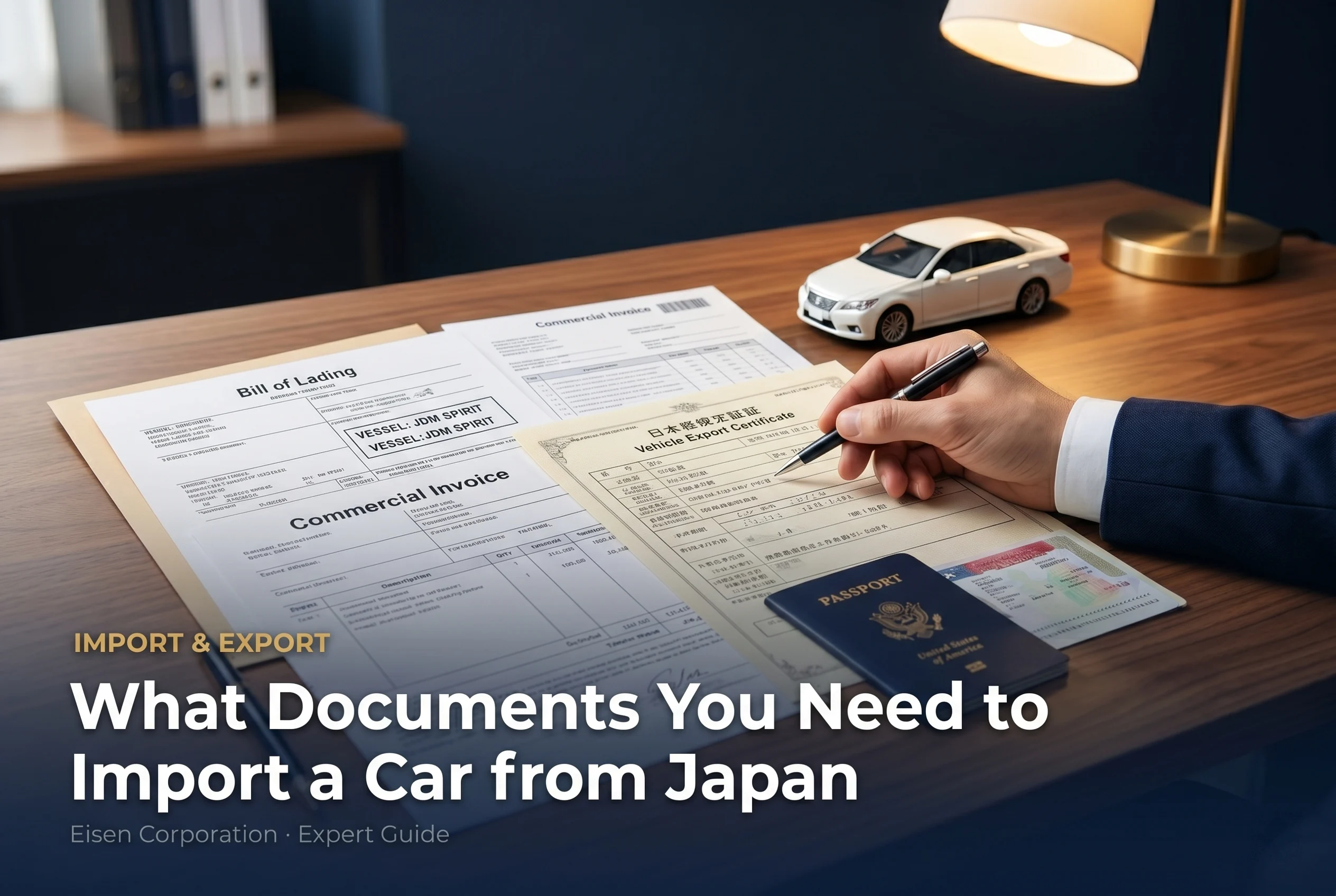
Importing a car from Japan involves more paperwork than most first-time buyers expect. Missing even one document can delay your shipment at the port, trigger customs holds, or in worst cases result in the vehicle being returned or seized.
This guide covers every document you need - from the moment a vehicle is purchased at auction to the day it clears customs at your destination port.
1. Export Certificate (Deregistration Certificate)
Before any vehicle can legally leave Japan, it must be deregistered from the Japanese vehicle registry. This produces an Export Certificate - sometimes called a deregistration certificate - which proves the car has been officially removed from Japan's road system.
This document is issued by the Land Transport Office in Japan and is one of the most critical papers in the entire import process. Without it, customs at your destination port will not release the vehicle.
At Eisen, we handle deregistration for every vehicle we export as part of our standard process - you never have to chase this document yourself.
2. Bill of Lading (B/L)
The Bill of Lading is the shipping contract between the exporter and the shipping line. It confirms that the vehicle has been loaded onto a vessel and is en route to the destination port.
The B/L includes:
- Vessel name and voyage number
- Port of loading (Japan) and port of discharge (destination)
- Container or RoRo reference number
- Vehicle description, chassis number, and make/model
- Consignee details (the importer)
You will need the original B/L to release the vehicle at the destination port. Keep it safe - losing the original causes significant delays.
3. Commercial Invoice
The commercial invoice is the official record of the transaction between the exporter (Eisen) and the importer (you). It states the agreed purchase price of the vehicle in USD or JPY, which customs authorities use to calculate import duties and taxes.
The invoice must clearly show:
- Seller and buyer details
- Vehicle make, model, year, and chassis number
- Transaction value and currency
- Payment terms
Undervaluing a vehicle on the commercial invoice to reduce customs duty is illegal and can result in serious penalties. Always use the accurate transaction value.
4. Packing List
For RoRo (Roll-on Roll-off) shipments, the packing list confirms what is inside or with the vehicle - spare tire, tools, floor mats, and any personal items shipped with the car. For container shipments this document is more detailed and mandatory.
5. Insurance Certificate
Marine cargo insurance covers the vehicle from the moment it is loaded in Japan until it arrives at the destination port. The insurance certificate proves the vehicle is covered and is required by many ports and customs authorities as part of the clearance documentation set.
Eisen arranges marine insurance for all vehicles we export. The certificate is issued before the vessel departs Japan and forwarded to you with the rest of the document set.
6. Auction Sheet and Vehicle Inspection Report
While not always a mandatory customs document, the original auction sheet and pre-export inspection report are essential for your own records and increasingly requested by customs officers in African, Caribbean, and South Asian markets.
The auction sheet confirms the vehicle's condition grade at the time of sale. The inspection report documents the vehicle's condition at the time of export. Together they provide a paper trail of the car's history from Japan auction to your port.
7. Customs Import Declaration (Destination Country)
This document is prepared and submitted at the destination port - not in Japan. It is the official declaration to your country's customs authority that you are importing a vehicle. The required format varies by country, but typically requires:
- Vehicle details (make, model, year, engine size, chassis number)
- Commercial invoice value
- Bill of lading reference
- Importer identification (passport, business registration, or tax ID)
In most countries this is handled by a local customs clearing agent who you appoint at the destination port.
8. Certificate of Conformity (Where Required)
Some countries require a Certificate of Conformity confirming the vehicle meets local road safety and emissions standards. Requirements vary significantly - some markets accept Japanese Shaken (roadworthiness certificate) as an equivalent, others require independent testing on arrival.
Check with your local transport authority or customs clearing agent before importing to understand exactly what is required in your market.
Pro Tip: Keep a Complete Document Set
Always keep digital copies of every document in the list above. Port delays are common and having scanned copies of your B/L, invoice, and export certificate means you can resolve most issues remotely without waiting for original documents to be couriered.
At Eisen, we provide a complete digital document pack for every shipment - all documents organised and ready before the vessel departs Japan.
Working With Eisen
When you import through Eisen, our export team prepares and verifies every document listed above. We coordinate with shipping lines, Japan's Land Transport Office, and marine insurers on your behalf - so your paperwork arrives complete, accurate, and on time.
Get in touch with our team to discuss your next import and we will walk you through exactly what is needed for your specific destination market.