One of the most common questions from first-time importers is simple: how long does it actually take? The honest answer is that it depends on several factors - where you are importing to, which shipping route is used, and how quickly documentation is processed.
This guide gives you a realistic, stage-by-stage timeline so you know exactly what to expect from the moment you win a vehicle at auction to the day it arrives at your destination port.
Stage 1: Post-Auction Processing - 1 to 2 Weeks
After a vehicle is won at auction, it does not ship immediately. The car first needs to be:
- Paid for in full by the exporter
- Transported from the auction yard to the export port (usually Osaka, Nagoya, or Tokyo)
- Physically inspected and prepared for export
- Deregistered from Japan's vehicle registry (Export Certificate issued)
This stage typically takes 7 to 14 days depending on the auction house location and the export port being used.
Stage 2: Port Holding and Vessel Loading - 1 to 3 Weeks
Once the vehicle arrives at the export port, it waits for the next available vessel sailing to your destination. Shipping lines operate on fixed schedules - vessels depart on set dates, not on demand.
If a vehicle arrives at port just after a vessel has departed, it may wait up to three weeks for the next sailing. On average, port holding time is 1 to 2 weeks.
During this stage, the Bill of Lading and other shipping documents are prepared and issued.
Stage 3: Ocean Transit - 2 to 6 Weeks
This is the longest stage and varies most by destination:
East Africa (Mombasa, Dar es Salaam): 3 to 4 weeks
West Africa (Lagos, Tema, Mombasa via Suez): 4 to 6 weeks
Pakistan (Karachi, Port Qasim): 3 to 4 weeks
Caribbean (Kingston Jamaica, Trinidad): 4 to 6 weeks
New Zealand / Australia: 2 to 3 weeks
United Kingdom: 5 to 6 weeks
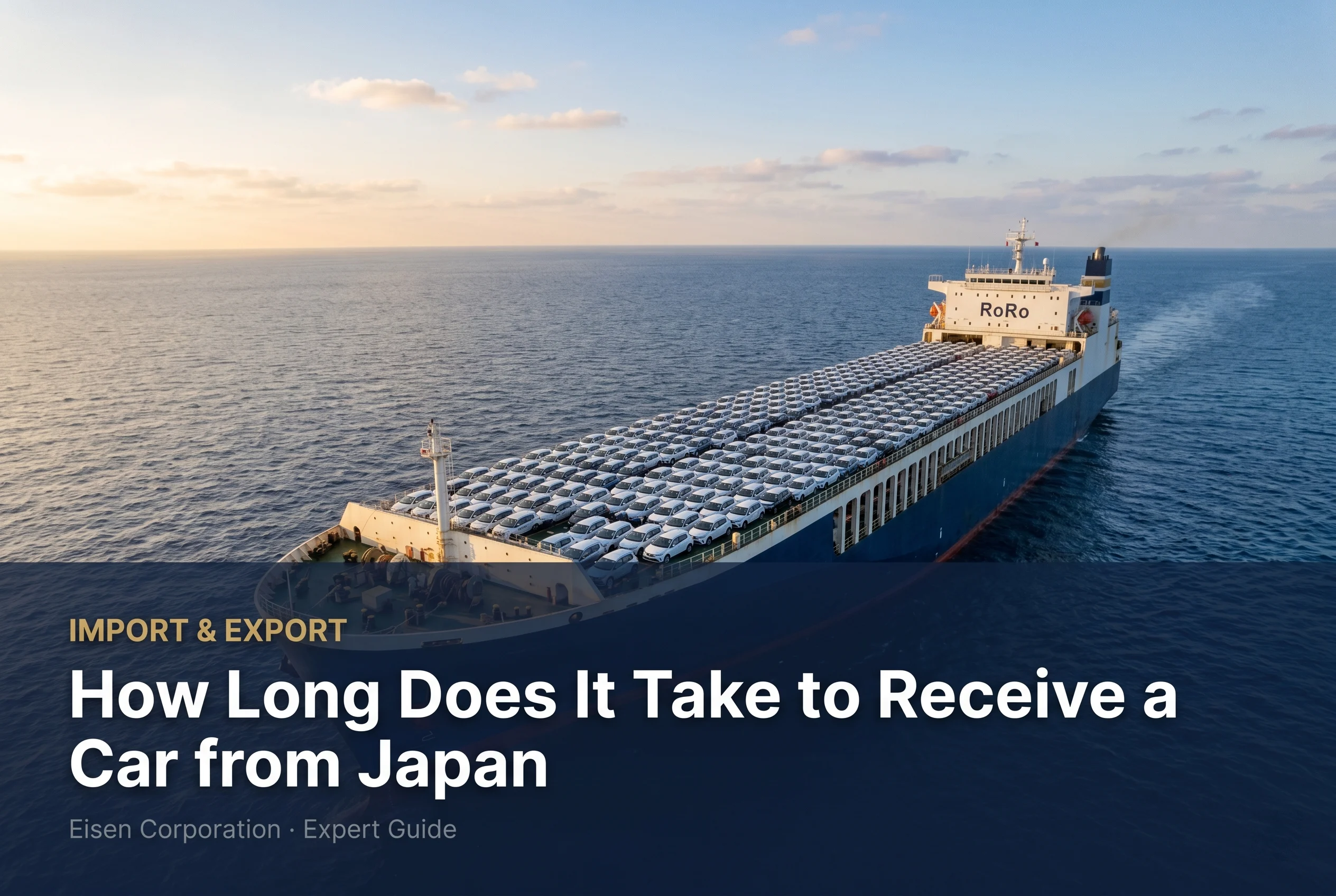
These are estimates for RoRo vessels, which carry vehicles on drive-on drive-off decks. Container shipments follow similar routes but loading and unloading takes slightly longer at each end.
Stage 4: Destination Port Customs Clearance - 1 to 4 Weeks
Customs clearance time varies significantly by country. Some ports clear vehicles in under a week. Others - particularly in West Africa and parts of the Caribbean - can take 2 to 4 weeks depending on port congestion, documentation accuracy, and local procedures.
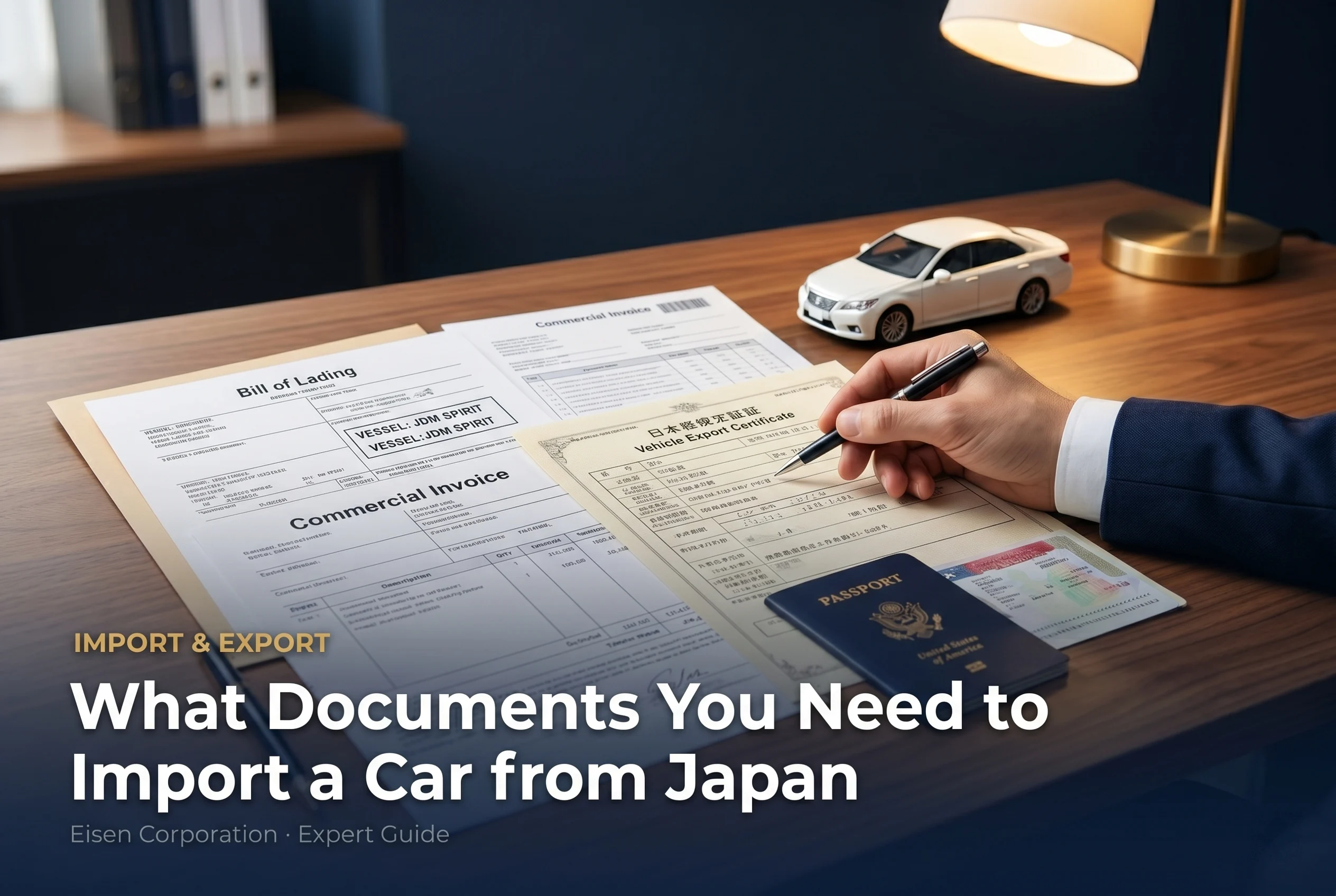
Having a complete, accurate document set (Bill of Lading, commercial invoice, export certificate, insurance certificate) dramatically reduces customs clearance time. Errors or missing documents are the single biggest cause of delays at this stage.
| Destination | Estimated Total Time |
| East Africa | 7 to 10 weeks |
| West Africa | 9 to 13 weeks |
| Pakistan | 7 to 9 weeks |
| Caribbean | 9 to 13 weeks |
| Australia / NZ | 6 to 8 weeks |
| United Kingdom | 10 to 13 weeks |
What Can Cause Delays?
Incomplete documentation - Missing or incorrect paperwork is the most common cause of customs delays. Ensure your exporter provides a complete document set before the vessel departs.
Port congestion - Major ports like Mombasa and Lagos experience periodic congestion that can add 1 to 3 weeks to clearance times.
Public holidays - Japan's Golden Week (late April to early May) and New Year period significantly slow auction activity and post-auction processing.
Vessel schedule changes - Shipping lines occasionally reschedule or cancel sailings, particularly on less frequent routes.
How Eisen Keeps Your Shipment on Track
At Eisen, we provide shipment tracking updates at every stage - from auction win confirmation through vessel departure and estimated arrival. Our export team monitors each shipment and alerts you immediately if any issue arises that could affect your timeline.
We also prepare and verify every document before the vessel departs Japan, which is the single most effective way to avoid customs delays at your end.
Contact our team to discuss your destination and we will give you an accurate timeline estimate based on current vessel schedules and port conditions.